
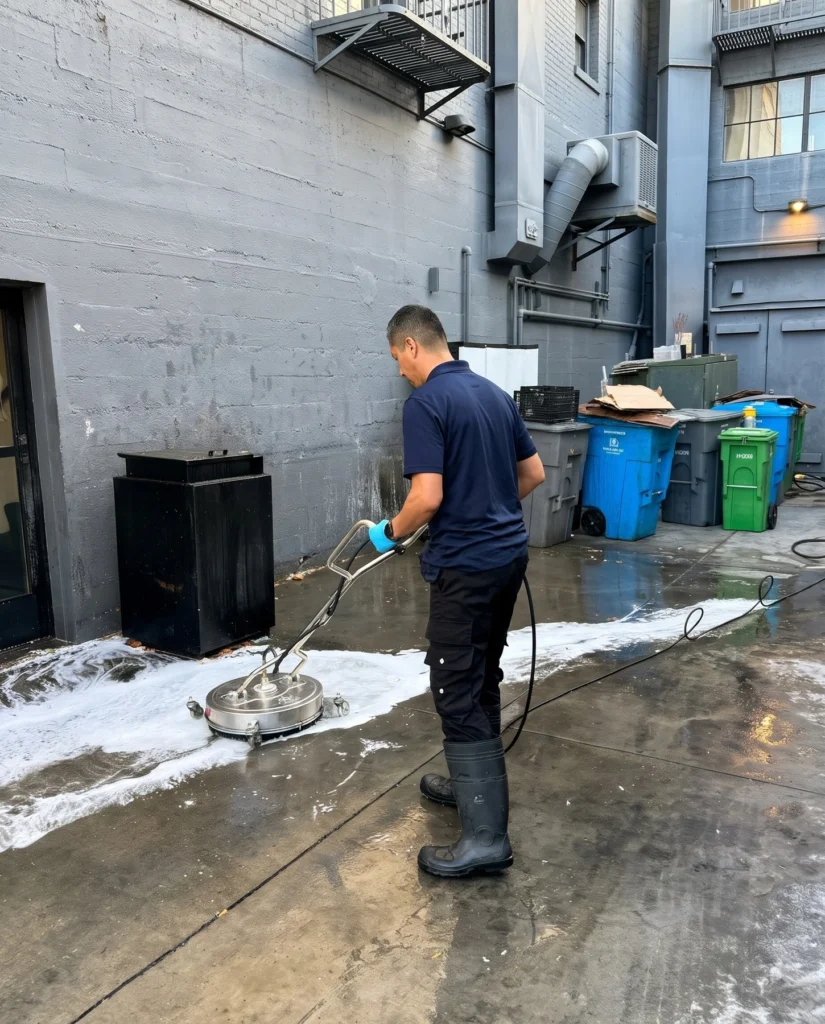
Fog, street dust, and the occasional rainy season leave a film on San Francisco homes that a garden hose rarely moves. Pressure washing lifts it off siding, front stairs, and walkways, and it brings back the curb appeal you had when the paint was new. Knowing how often to pressure wash your house keeps it looking cared for without wearing down the surfaces you are trying to protect.
How Often to Pressure Wash a House
We suggest starting with one exterior cleaning a year and adjusting from there. A once-a-year wash removes dirt before it builds into stains, and it gives you a regular chance to look closely at your exterior walls, paint, and trim.
Some homes need attention more often than once a year. Walls that stay damp and shaded, homes under large trees, and front stairs that see heavy foot traffic can look dirty again within a few months. Other homes, especially newer ones with fresh paint in sunny spots, can go longer between washes.
Signs Your House Needs Pressure Washing Now
A calendar is a useful guide, but your house will show you when it needs a wash. An EPA guide to mold in the home explains that no type of mold grows without water or moisture. Damp and shaded walls are the first place to look. Watch for these signs:
- Green or black spots of mildew on shaded walls or under the eaves.
- A gray film on the siding that wipes off on your finger.
- Dark streaks running down from gutters, window sills, or trim.
- Slippery buildup on front stairs, walkways, or a back patio.
- Faded-looking paint that brightens when you wipe a small area with a damp cloth.
When to Pressure Wash a House
Dry weather is the best time of year to pressure wash a house in San Francisco. Late spring through early fall gives the siding a chance to dry, and you avoid washing right before a storm sends more dirt back onto the walls.
Pick a calm day with the sun off the side you are cleaning. Water and cleaning solution dry slower in the shade, which gives the cleaning solution time to work and helps prevent spots.
How Different Exteriors Handle Pressure Washing
Not every surface takes high pressure the same way, so the right method depends on what your house is made of.
Vinyl Siding
Vinyl siding cleans well with lower pressure and a cleaning solution. Spray straight at the siding, never upward, because water forced behind the panels can stay trapped there. Check your siding manufacturer’s care instructions before using a pressure washer, since some brands limit the pressure they allow.
Wood Siding and Painted Trim
Wood siding and painted trim need the gentlest touch. Too much pressure can lift paint, raise the wood grain, and push water into joints, which can damage paint jobs that still have years left in them. Soft washing, which uses low pressure with a cleaning solution, is a common choice for wood and older painted surfaces.
Stucco, Brick, and Concrete
Stucco and brick hold up to moderate pressure, though old mortar and cracked patches can break apart under a strong spray. Concrete stairs, walkways, and driveways can take higher pressure, and they can show the biggest change after a wash.
San Francisco Rules for Pressure Washing Runoff
San Francisco has clear rules about where the wash water goes. According to the San Francisco Public Utilities Commission, runoff from washing hard surfaces is never allowed to flow into storm drains or catch basins. The SFPUC also asks people to sweep first and use water sparingly. For spot washing, it names a pressure washer with a maximum flow rate of 1.6 gallons per minute as one of the most efficient tools.
Plan where the water will go before you start. Cover nearby storm drains, sweep up debris first, and keep soapy water out of the street and gutter.
Washing Your House Yourself vs. Hiring a Professional
Washing a house yourself can work for a single-story home with easy access. You will need the right nozzle, a cleaning solution made for your siding, and protective gear like safety glasses and gloves. Start with the lowest pressure that removes the dirt and test a small area first.
Hiring a professional makes sense for two-story homes, steep front stairs, and older painted exteriors. A team with the right equipment can reach high walls safely, choose the pressure for each surface, and handle the runoff the way the city requires.
Our pressure washing service covers home exteriors, front stairs and entries, concrete walkways, and building fronts for homes and businesses. Each job is quoted on its size and scope. You can also pair an exterior wash with window cleaning, so the glass looks as clean as the walls around it.
Frequently Asked Questions
Can Pressure Washing Damage My House?
High pressure can lift paint, damage wood, and force water behind siding. Using the lowest pressure that works, spraying straight at the surface, and testing a small area first help prevent damage.
Should I Pressure Wash My House Before Painting?
Cleaning the siding first removes dirt, chalky residue, and mildew, so the new paint bonds to a clean surface. Give the exterior a few dry days after washing before the painters start.
Is Pressure Washing Allowed in San Francisco?
Yes, the SFPUC allows pressure washing for the sides and windows of buildings, for health and safety needs, and for keeping sidewalks up to city standards. The work has to use water efficiently, and none of the runoff can reach the sewers or storm drains.
Keeping the exterior clean is one of the easiest ways to make a home look cared for year after year. If your siding, stairs, or walkway are due for a wash, request a pressure washing quote or call (415) 820-7230, and we will price the job around your home.